Water Damage Restoration in Spring Lake Park, MN
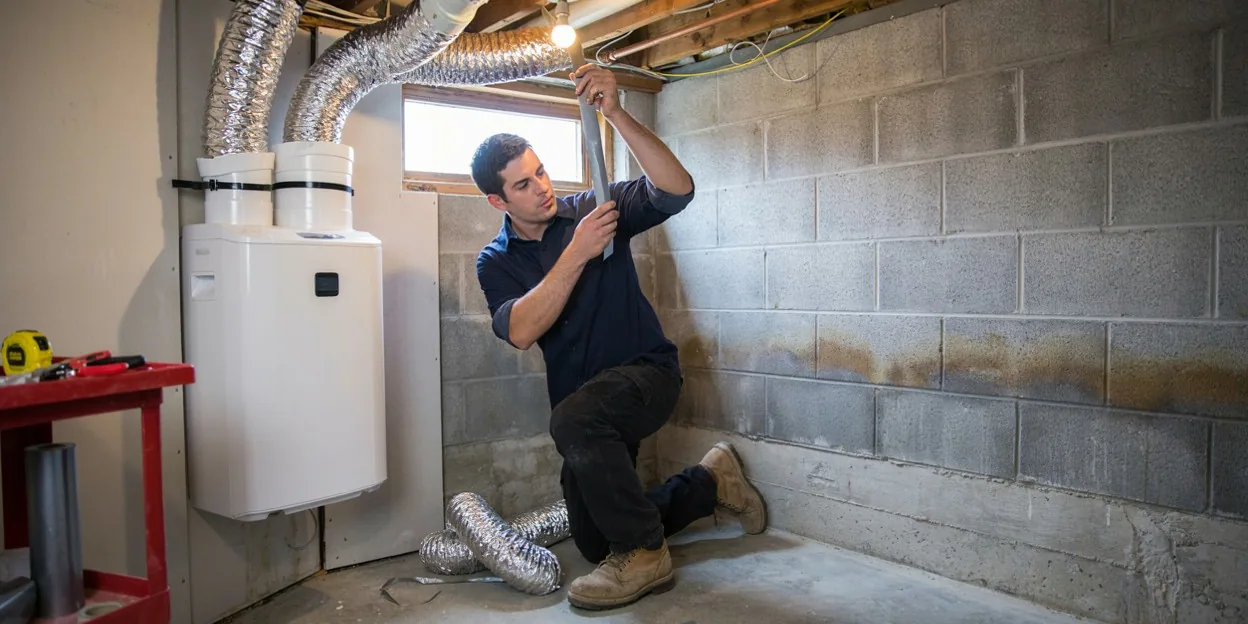
Spring Lake Park is two square miles wedged between Blaine, Fridley, Mounds View, and Coon Rapids, with Highway 65 running up the middle and about 7,200 people living on either side of it. Almost all of its housing went up in the 1950s and early 1960s: one-story ramblers on small sandy lots, block basements, a floor drain, and copper supply lines through the rim joist. Spring Lake itself is a shallow pond on the west side, and the city shares the flat sand and shallow groundwater of the rest of the Coon Creek watershed.
A 1956 rambler here has had three or four owners and at least one basement finish, usually paneling on furring strips against the block with carpet glued to the slab. The pit, if there is one, was cut in later.
This site puts Spring Lake Park homeowners through by phone to an independent local water damage provider. The provider meters the block before anything comes off it.
Spring Lake Park water damage in a 1950s rambler
Water through the block during a March thaw is a basement flooding cleanup, and glued-down carpet decides whether the slab can dry with the floor in place. A hose bib line in the garage wall that split in a deep freeze is a frozen pipe cleanup. A floor drain that backed up when the clay service line clogged is a sewer backup cleanup.
A small city with its own permit desk and its own school district
The City of Spring Lake Park issues its own building permits through its code enforcement office, so a basement rebuild here does not go through Blaine even though the city line runs down the middle of some blocks. The town also anchors Spring Lake Park Schools, District 16, which reaches into south Blaine and Fridley, and a finished basement bedroom for a student in that district gets scoped as living space, not storage.
Call (763) 297-2728 and say how much of the basement floor is under water. An independent local water damage provider serving Spring Lake Park takes it from there.
Services Available in Spring Lake Park
Basement Flooding Cleanup
Groundwater or storm runoff pumped out of a Blaine basement, then the carpet pad, paneling, and block walls metered to find what stayed wet.
Sump Pump Failure Cleanup
Cleanup after the pump quit during a snowmelt or lost power in a thunderstorm, and drying of the floor and walls the pit overflow reached.
Water Extraction
Standing water pulled off concrete, carpet, and tile on any level of the house, followed by the first moisture readings on the walls.
Structural Drying
Air movers and dehumidifiers run against daily readings until the slab, studs, and drywall come back to dry numbers in a closed-up Minnesota house.
Frozen Pipe Cleanup
Cleanup after a supply line froze in a rim joist, garage wall, or cold corner during a deep freeze and split, then drying of what the thaw soaked.
Ice Dam and Roof Leak Water Damage
Wet attic insulation, ceilings, and exterior walls dried after an ice dam at the eave or a storm-torn roof let water into the house.
Water Heater Leak Cleanup
A tank that let go in the utility room, the water it spread across the basement floor, and the walls it reached pumped out and dried.
Sewer Backup Cleanup
Contaminated water that came up a floor drain or basement fixture removed, the porous materials it touched taken out, and the slab cleaned and dried.