Water Extraction in Blaine, MN
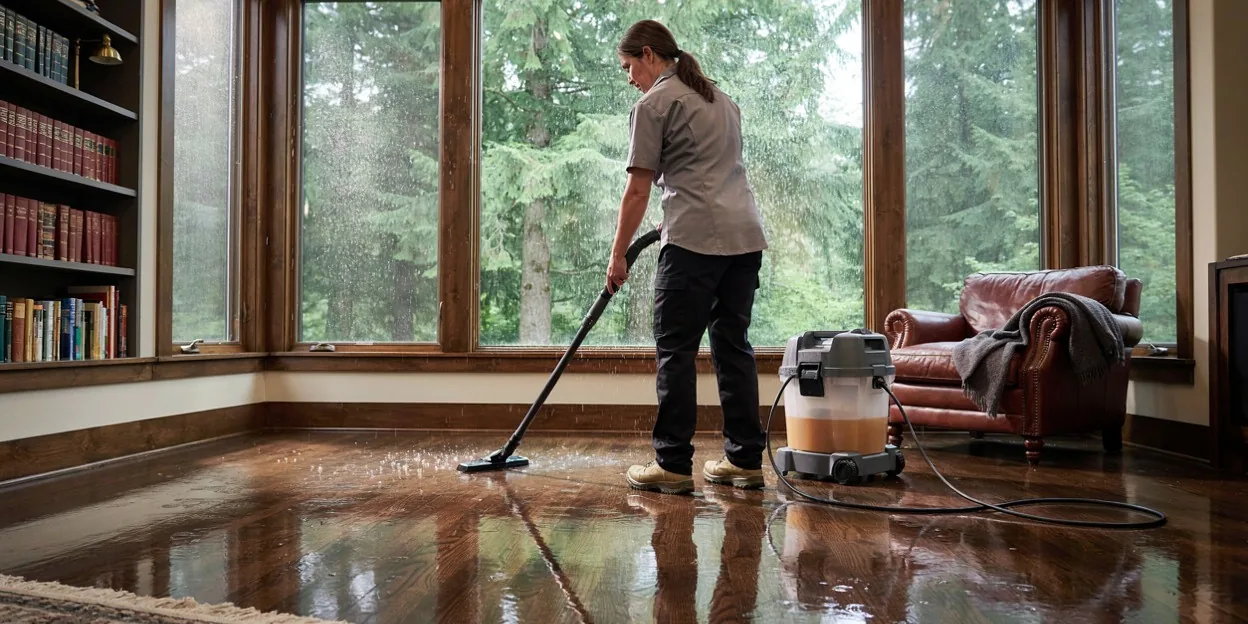
The dishwasher supply line let go while you were at work, and by six o'clock the kitchen floor, the hallway, and the top of the basement stairs were under a quarter inch of water. It has already found its way down the stairwell and is dripping off the basement ceiling tiles. This site puts you through by phone to an independent local provider who does water extraction in Blaine homes and across Anoka County.
Pulling the water before it soaks in any further
Extraction is the first physical step in every water job, and speed is the point. The crew brings truck-mounted or portable extractors, pulls standing water off tile, laminate, carpet, and concrete, and then goes over carpet a second time with a weighted wand that squeezes the pad. On a main floor they pull the toe kicks and check under the cabinets. In a basement they lift a corner of the carpet to see whether the pad is holding more than the surface shows.
With the standing water gone, the crew switches to the moisture meter. Every wall the water touched gets a reading at the base, and the ceiling below gets one too if the water was upstairs. Those numbers set the drying plan.
Stop the source, then get out of the way of the water
Close the valve under the sink or the main by the meter if the water is still running. Turn off the breaker for any room where water is on the floor near outlets, and for the basement if it is dripping through the ceiling. Move furniture and rugs off the wet floor, pull the drawers of a wet cabinet so air can reach it, and photograph everything before it moves. Skip the shop vac if water is near the outlets. Then call.
What extraction saves and what it cannot
Quick extraction saves carpet more often than people expect, and the pad almost never. Laminate flooring that swelled at the seams is finished. Sheet vinyl on a slab traps water underneath and usually comes up. Hardwood on a main floor may be saved with mats and drying if the crew reaches it inside a day or two. Cabinets that read wet at the base get metered underneath before anyone decides. Drywall dries in place if the reading is close to dry and the wall is open to air. After extraction, structural drying runs until every material reads dry.
If the water started in a basement pit, the extraction is the front end of a sump pump failure cleanup. If a tank in the utility room was the source, read water heater leak cleanup for what that looks like in a Blaine basement.
Why a Blaine main floor drains into the basement
Almost every house in Blaine has a full basement, so water on a main floor has somewhere to go. It runs down the stairwell, through the gaps around the plumbing stack, and along the ductwork, and it shows up as a wet ceiling tile or a drip from a can light in the finished room below. The 1960s ramblers south of 99th Avenue have a floor drain in the utility room that takes some of it. The two-stories built since the 1990s in The Lakes and Club West have a second floor of bathrooms above living space, so a supply line or a tub overflow upstairs wets two ceilings before it reaches the slab.
A slab in a Blaine basement is also cold and damp most of the year because the sand under it is wet, so water that gets under carpet there dries slower than the same spill would on a slab in a dry climate.
Sudden losses from a supply line or an appliance are the losses most homeowner policies respond to. Slow leaks that ran for weeks are handled differently. This site cannot read your policy. Ask the crew to record the source, the readings, and the photos on the first visit.
Call about the water on the floor
Say which floor the water is on, whether the source is stopped, and whether it has reached the basement. Mention hardwood, laminate, or carpet, because that changes how fast the crew needs to be there. Call (763) 297-2728.